
20 years focus on Filter Press!
Excellent quality & 7x24 hours After-sales Service
Tel & WhatsApp+8613731372739
20 years focus on Filter Press!
Excellent quality & 7x24 hours After-sales Service

Technology
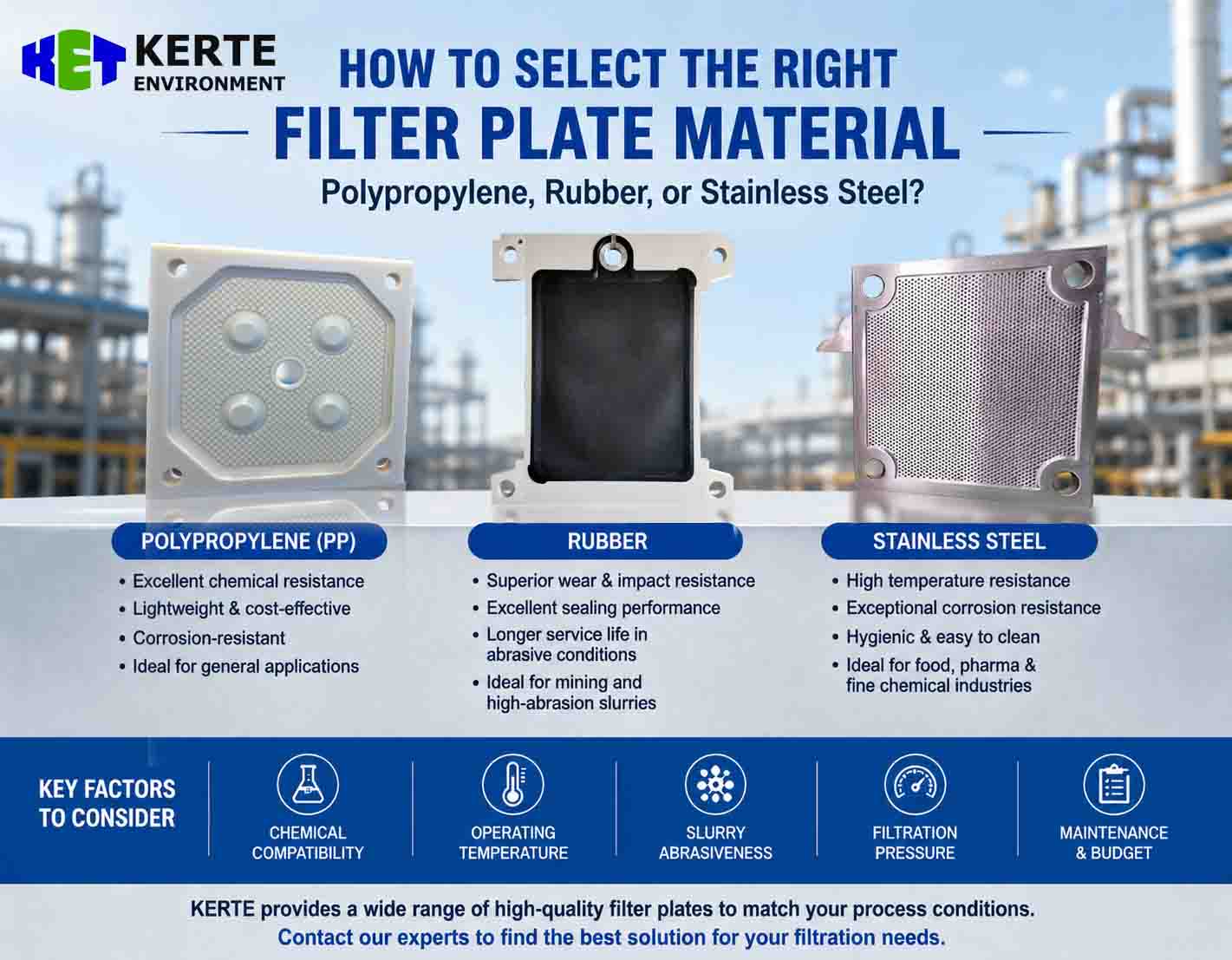
Selecting the right filter plate material improves filtration efficiency, durability, and operating costs. Compare polypropylene, rubber, and stainless steel to find the best solution for your applica...
Tel & WhatsApp+8613731372739
Product Details
Choosing the right filter plate material is critical for filter press performance, service life, and operating cost. The best option depends on your slurry, temperature, abrasiveness, and hygiene requirements.
At KERTE, we manufacture filter plates for a wide range of industrial applications. Below is a simple guide to help you choose between polypropylene (PP), rubber, and stainless steel.
1. Polypropylene (PP) Filter Plates
Polypropylene is the most common choice because it offers strong performance at a reasonable cost.
Advantages
Good resistance to acids and alkalis
Lightweight and durable
Corrosion-resistant
Smooth surface for easy cake release
Low maintenance and cost-effective
Best Applications:Mining tailings dewatering,Mineral concentrate filtration,Municipal and industrial wastewater treatment,Sand washing plants,Chemical processing
PP filter plates are suitable for most processes below about 90°C (194°F).
2. Rubber Filter Plates
Rubber filter plates are ideal for abrasive slurries and harsh working conditions.
Advantages
Excellent wear resistance
Strong impact absorption
Reliable sealing performance
Longer service life in abrasive service
Reduced risk of plate damage
Best Applications:Iron ore processing,Coal slurry dewatering,Copper and gold mining,High-solid-content mineral slurries,Other abrasive mining operations.
Rubber plates usually cost more than PP, but they can lower long-term costs in severe environments.
3. Stainless Steel Filter Plates
Stainless steel is the best choice when temperature, cleanliness, or corrosion resistance is essential.
Advantages
High-temperature resistance
Excellent corrosion resistance
Hygienic and easy to clean
trong and long-lasting
Suitable for sterilization
Best Applications:Iron ore processing,Coal slurry dewatering,Copper and gold mining,High-solid-content mineral slurries,Other abrasive mining operations.
Key Factors to Consider
Chemical compatibility
Operating temperature
Slurry abrasiveness
Filtration pressure
Budget and maintenance needs
Which Filter Plate Is Right for You?
For most industrial uses, polypropylene offers the best value. Rubber is best for abrasive mining slurries. Stainless steel is ideal for hygienic or high-temperature applications.
At KERTE, we can help you select the right filter plate material based on your process conditions and production goals.
Previous post: Chile Delays Maricunga Lithium Project to 2034


